ALL TROUT
streaming:
Bandcamp, Spotify, Apple Music, Tidal, YouTube
released October 9, 2026
all music and lyrics by Rene Duplantier except:
- Going to Houma - music by Rene Duplantier and Charlie Crawford
- In Manhattan - music and lyrics by Ian Richard Devaney, originally performed by Nation of Language (Ian Richard Devaney, Aidan Noell, and Michael Sue-Poi)
all songs produced by Rene Duplantier
additional production by Joseph Berg at Cherry Creek Music and Theresa Romero
all songs mixed and mastered by Joseph Berg at Cherry Creek Music
written 2013-2026, recorded 2022-2026
Rene and I met when we were living in New Orleans, a city beside the city where he grew up. I had moved to the South for a job; Rene was commuting from his parents’ house to get a master’s degree in architecture. We met through mutual friends and ended up, for a brief summer, staying within blocks of each other. At some point, Rene took a picture of me on the swing on the porch where I lived for my second summer in the city. I must have deleted the photo, but its memory is the best I have of the way that time felt — humid under the pressing sky of summer afternoon, us relaxed in the yellow respite following a thunderstorm. I feel nostalgic for it, the way I might imagine feeling nostalgic for high school, but don’t.
A friend of mine once described our larger community in the city, primarily comprised of twenty-something transplants, as captive to a “prolonged adolescence,” which I understood to mean they prioritized things like the moonrise, their friends, and late-night pleasures, rather than developing their careers or — having babies, maybe. At the time, I wasn’t sure that those values were actually at odds with each other, or which, if they were, was more important; but I also felt that my friend was describing a party to which I had not quite been invited: not only because I did not really consider myself a member of the loose social scene at which he was gesturing, but also because I felt I was actually, in New Orleans, only finally reaching the milestones I thought I was supposed to have reached in high school, making this “prolonged adolescence” a beginning, rather than an end. Yes, I was having sex; yes, men looked at me; yes, the light was hazy and heavy; yes, everyone I knew lived nearby.
Rene was one of the people nearby, an exception that proved the rule of my loneliness and whose friendship is one of the few I hold on to from that time. He was not living a prolonged adolescence, I don’t think; his voice, as one of the few people I met in my first years in the city who had any personal connection to Louisiana, felt different: more acerbic, less romantic; if not more grounded, at least more grounding for me.
At the time, the late teens of the 2000s and then the first years of its twenties, Rene began to write the songs that appear in this album. Simultaneously, he wrote, produced, and released the extant Slow Rosary records. I loved those earlier albums: they felt ambitious, slightly unfriendly, gothic, romantic, and grating; their sound was large, and it fit the scale of emotion I now associate with that time. Something about the mixture of the industrial and the spiritual; the aggression and the awe of youth. Rene’s music conveys both the texture of those feelings — a grippiness, a grit, a dip and swell — and the scope: entire. Nothing is qualified; truths are plain. Young people’s emotions are uncompromising, as are young people; older people’s feelings tend to include more qualification, argument, timidity, claims of “nuance” and negotiations with expectations we wish we could allow ourselves to have. I, at least, was more vulnerable when I was younger, more likely to find myself in emotionally dangerous positions and less likely to protect myself. Now I am less likely to feel the way I felt then — but I can feel the way I felt then when I listen to Rene’s music, particularly this album.
Rene might say that this record is more accessible than his past music, more pleasant, less antagonistic; he might say that its scale is smaller, or at least that the songs are shorter, and that people might prefer to listen to them. He would say all these things, I think, with a smile of slight self-derision, maybe best exemplified by a text exchange we had as I listened to the record in preparation for writing this prologue:
me: The Melanie song is amazing
me: I love the whole album but that one in particular
me: And the last one
Rene: Thank you Dev!!
Rene: So glad you like it
me: Yeah what a pleasure of a project
Rene: Haha I am glad to hear that. It’s certainly less bummer than my previous works.
Rene: Also, more bite-sized.
me: I wasn’t saying your past work was sad and too long
Rene: I know, I am saying that!!
He might say, too, that the songs are mostly stories, some of them like fables, in varying degrees of fiction or distance from real people he might have known. He could say that he wrote many more, which he excluded from this arrangement. He likely would not say — though I would — that each song is worth approaching as a poem, or that he is a gifted writer, whose lyrics can be alternately quippy and cutting — We can only hope for children half as unkind — resignedly romantic — Dream of us when the leaves fold over — and hopefully so: What you're seeing, I'll believe in. But I would say those things, and more: that this is an album that reveals more with each listen, whose catchiness serves to draw attention to its depth, and whose production and disciplined attention to the listener demonstrate a shift I might even call maturation.
Rene’s work hasn’t been juvenile. Its great success has been its ability to invoke the total seriousness of adolescence and early adulthood, the emotional lability, the frequent beauty and stress. I hear this, still, in this current record: the remonstration against something lost, or the act of losing; the comparison of that loss to natural disaster; the frustration that adult responsibility seems to demand concordant banality; the sudden acquisition of language for normalized violence, followed by the growing suspicion that this might be a violence in which you participate.
But there is also something else, a bit less brutal and a bit less complicated, potentially even — can I say predictable without implying worse? I would call it sweet; I would call it settled; I’m tempted to use the word domestic. It makes sense to me, for both the sonic and thematic arc of this album, that its ten songs, including a cover and a lyricless composition, were culled from a multitude more. Of course their writing spanned those years we lived near each other all the way into the present; of course it ends on a tone that matches how I see us now, when we live far apart, neither of us in New Orleans, in lives that look and feel different than they did then: we are not in, or approaching, more school; we share our homes with our partners, not our roommates; we save for retirement; we both make art in the hours around our day jobs, which are important, too. We are also, I think, happier, and if our joy and sadness swing less far, this is only because gravity has centered us closer to contentment.
I feel this development most in the final songs, particularly the second-to-last, whose sonic familiarity both accentuates its relatable sympathy and sets it apart from anything else I’ve heard Rene make. Melanie is joyfully… pleasant, a song to and from his life with his wife, simultaneously inviting reflection and batting away its significance. Melanie says I got problems with the past, / but I just hadn’t met her yet. What’s a better description of the shrug and smile possible when love is a truth on which you can stand, rather than a vision you can pursue? When you can forget analyzing your former self, who is irrelevant to the person you found, and the person they allow you to be? When you grow up, and the younger you seems, suddenly, unimaginable?
Art is one of the ways grown people get to access the unreasonable, uncomfortable, intoxicating headiness of feelings we might otherwise encourage ourselves to leave behind. This is particularly true — I want to qualify this, but I won’t — when we are lucky to find ourselves, at least now and hopefully for longer, in relationships we trust, through which we get to be people we like. All Trout suggests Rene has found this relational comfort not only personally, but musically: that his collaborators have helped him access a discipline and ease – or, a discipline successful enough that it suggests ease – that is generous to his audience, in which it is a pleasure to listen, and re-listen, to the stories that make up these songs.
essay by Devon Brody
personnel (in order of appearance):
Rene Duplantier - vocals, guitar, banjo, percussion, keyboard, piano, programming;
Theresa Romero - viola (1), guitar (5), vocals (5);
Blake Robicheaux - bass (1, 9), percussion (1);
Kate Gauthreaux - vocals (1, 4, 10);
Melanie Meisner - percussion (2, 3, 9, 10), keyboard (3), French horn (7);
Joseph Berg - bass (3, 5, 7, 8);
Charlie Crawford - guitar (6)
recorded at Rene’s old house in Lakeview, Inez Fernandez’s house, a short-term rental in Lake City, Rene’s old house in Queen Anne;
additional recording at Cherry Creek Music, the space in Metairie, Theresa’s house, Rene’s current house in Licton Springs
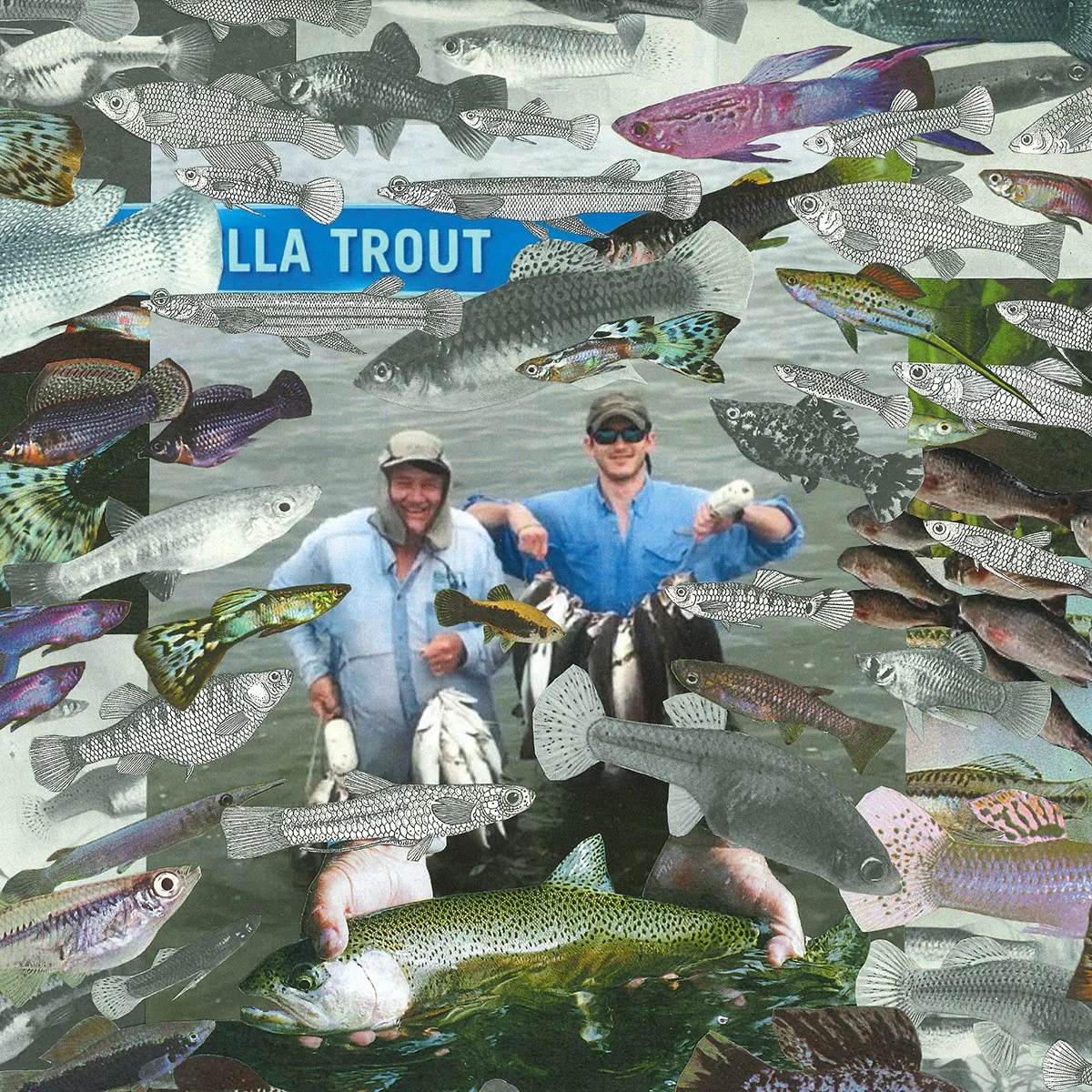
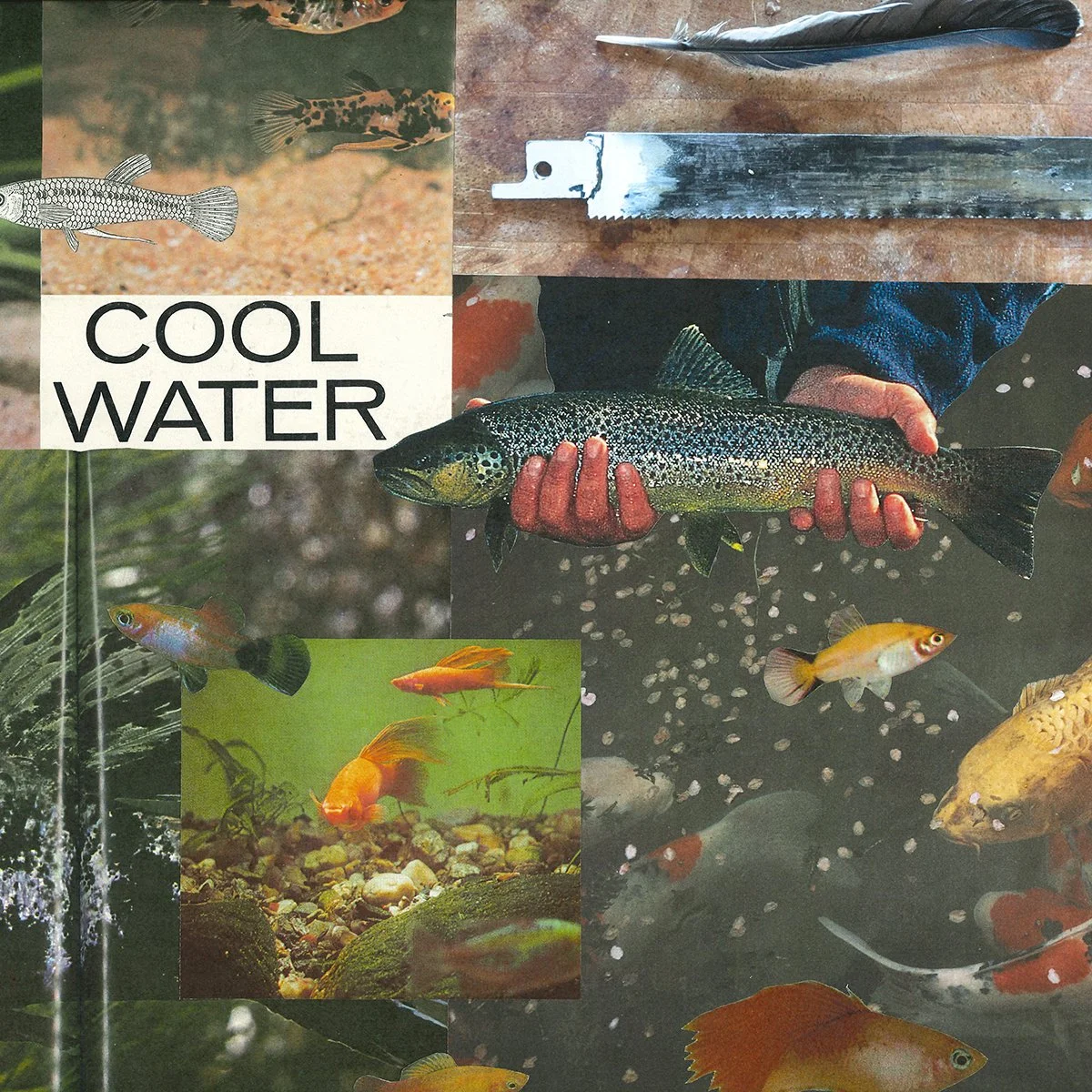
album art and layout by Rene Duplantier
The sample on Going to Houma is included with permission from Andrew Kolker and Louis Alvarez of The Center for New American Media. It comes from their YEAH YOU RITE! docuseries. Thank you, Andrew and Louis.
a very special thank you to:
all the players, everyone mentioned explicitly and implicitly in the songs, Nick Rosato II, Asa Ellingwood, Dreux Gerard, Devon Brody, Ryan Bordow, Juan-Pablo Saiz, Jackson Lundgren, Zach Lannes, Brad Bartee, Duplantier family, Inez Fernandez, Meisner family, Berg family, Emily Cross, Matt Jones, Avery Legendre, Adam Keil, Sean “Sean Donovan” Weber, Lacalli family, Will Roesner, Clara Zornado, Ming Lin, Jack Greenwood, Ryan Hendryx, and Stella Trout